Sudoku Variants: Beyond the Classic Grid — 7 Challenging Puzzle Types You Should Try
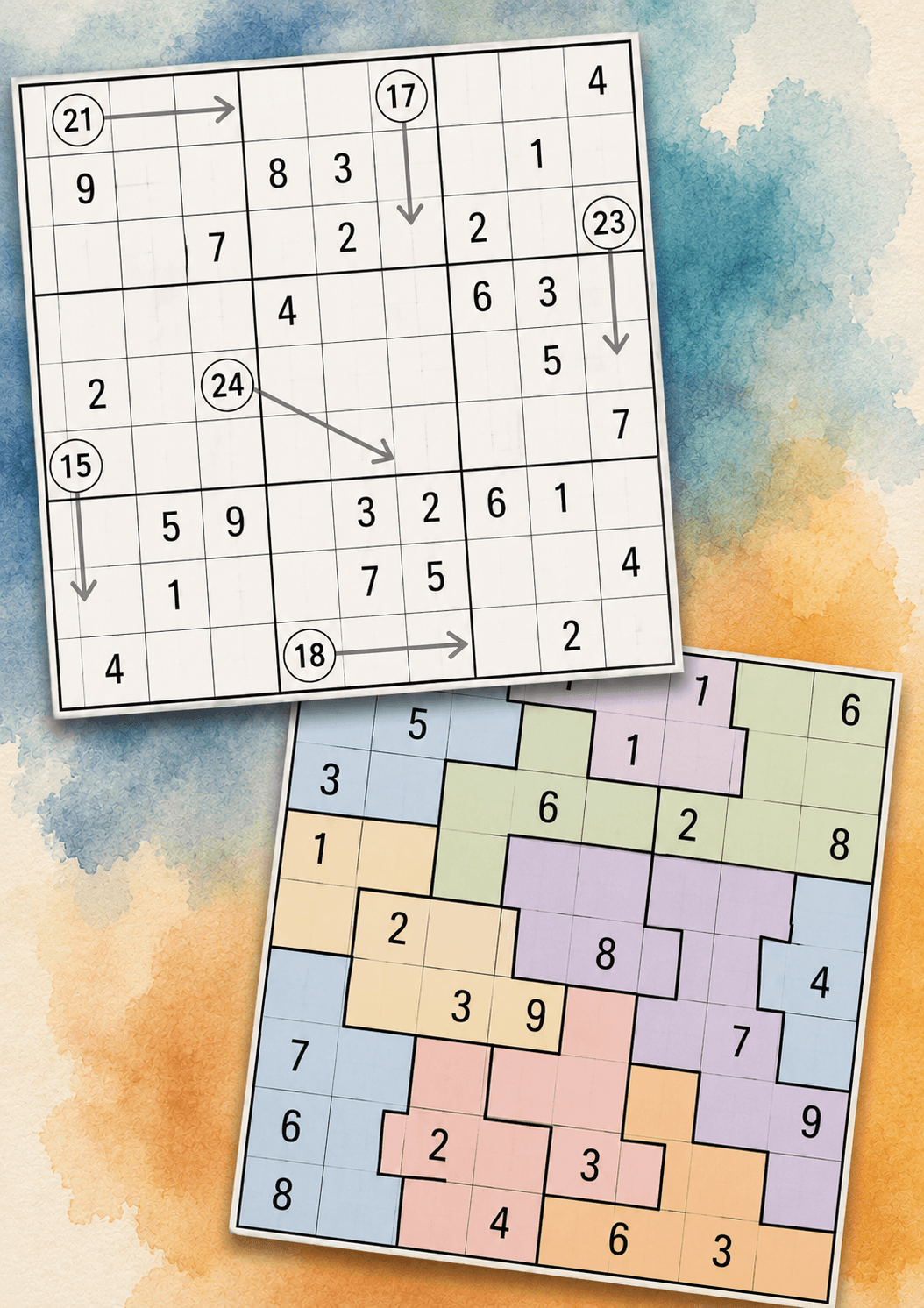
You've mastered regular Sudoku. But there's a whole universe of variants waiting—Jigsaw, Arrow, 16×16, Diagonal, Killer, Windoku, and Samurai. Each one keeps the logic of Sudoku while adding new twists.
You've mastered regular Sudoku. You can solve a 9×9 grid without breaking a sweat. But there's a whole universe of Sudoku variants waiting to be explored—puzzles that keep the familiar logic of Sudoku while adding new twists that make every solve feel fresh.
If you're looking for your next puzzle obsession, you're in the right place.
Why Sudoku Variants Matter
Classic Sudoku is brilliant. It's simple to learn, satisfying to solve, and endlessly replayable.
But after solving hundreds of standard puzzles, something changes. Your brain starts recognising familiar patterns. You become faster, but you're no longer challenged in quite the same way.
Sudoku variants solve that problem beautifully.
Instead of changing everything, they introduce one or two additional rules that force you to think differently. Suddenly you're back to analysing every move instead of relying on habit.
That's when puzzle solving becomes exciting again.
The Benefits of Solving Sudoku Variants
Sharpen Different Thinking Skills
Each variant exercises your brain in a different way.
- Jigsaw Sudoku develops spatial reasoning.
- Arrow Sudoku combines logic with arithmetic.
- 16×16 Sudoku requires patience and long deduction chains.
- Samurai Sudoku tests your ability to manage multiple puzzles at once.
The more variety you experience, the more flexible your logical thinking becomes.
Keep Puzzle Solving Fresh
Even the best puzzle becomes repetitive if it's always the same. Sudoku variants constantly introduce new situations, making every puzzle feel like a new challenge.
Improve Logical Deduction
Most variants cannot be solved through pattern recognition alone. Instead, they reward careful observation, elimination, and step-by-step reasoning—skills that make logic puzzles so satisfying in the first place.
A Great Screen-Free Hobby
Whether you're relaxing after work, travelling, or simply looking to reduce screen time, Sudoku variants provide hours of engaging entertainment using nothing more than pencil and paper.
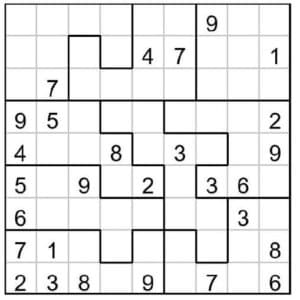
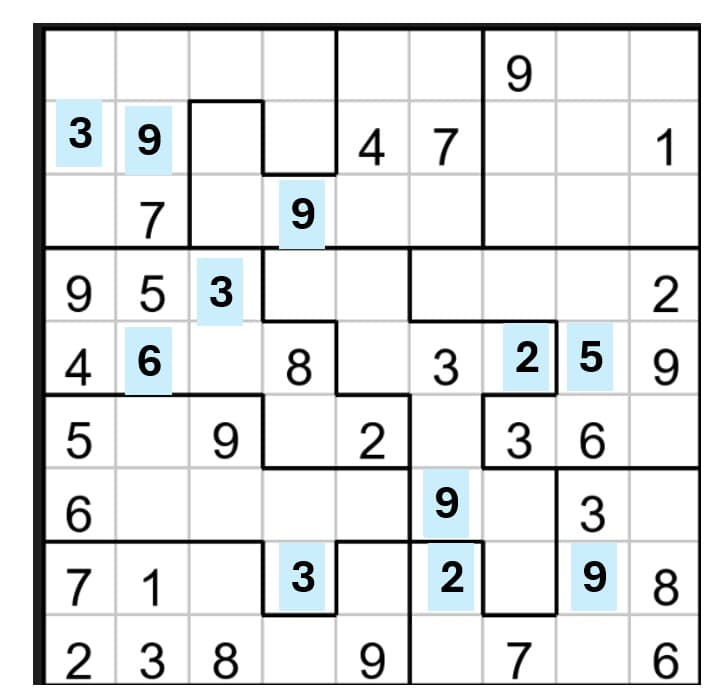
1. Jigsaw Sudoku (Irregular Regions)
Jigsaw Sudoku is one of the easiest variants to learn because the core rules remain exactly the same.
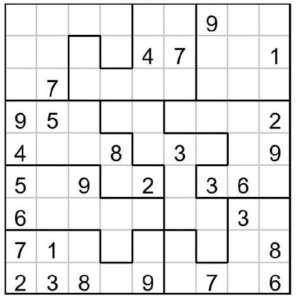
Instead of regular 3×3 boxes, the grid is divided into irregular regions. Every row, column, and irregular region must still contain each number exactly once.
At first glance it looks unusual, but after solving one or two puzzles you'll quickly adapt. The challenge comes from thinking spatially instead of relying on the familiar square boxes.
Why you'll enjoy it
- Great introduction to Sudoku variants.
- Trains spatial reasoning.
- Feels fresh without becoming overwhelming.
Difficulty: Easy to Medium | Typical solving time: 10–20 minutes
Play Jigsaw Sudoku Travel Book
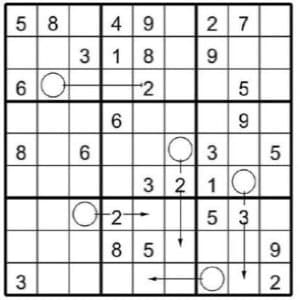
2. Arrow Sudoku
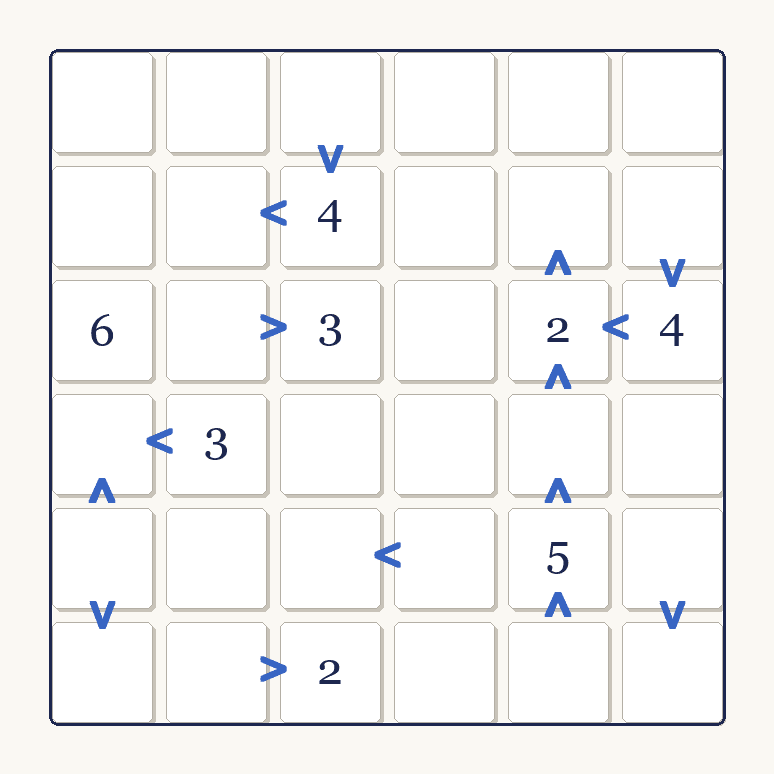
Arrow Sudoku introduces a simple rule that creates surprisingly deep puzzles.
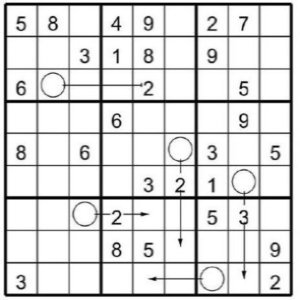
Each arrow begins with a circle. The number inside the circle must equal the sum of all the numbers placed along that arrow. Suddenly you're combining arithmetic with traditional Sudoku deduction.
Every placement affects both the Sudoku grid and the arrow sums, creating puzzles that feel completely different from classic Sudoku.
Why you'll enjoy it
- Combines mathematics with logic.
- Encourages deeper planning.
- Every puzzle feels unique.
Difficulty: Medium | Typical solving time: 15–25 minutes
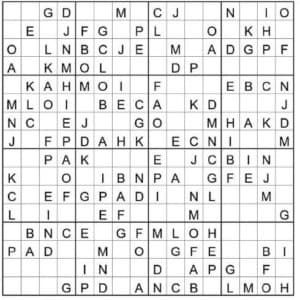
3. 16×16 Sudoku (Super Sudoku)
Ready for a real challenge?
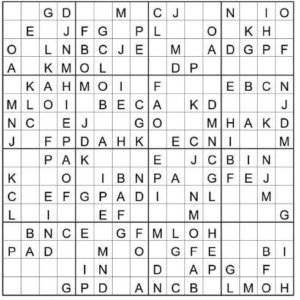
16×16 Sudoku expands everything you know about Sudoku. Instead of numbers 1–9, you'll work with sixteen symbols (often 1–16 or A–P). The familiar 9×9 grid becomes a giant 16×16 puzzle divided into sixteen 4×4 regions.
The rules don't become more complicated. The puzzle simply becomes much larger. That extra size creates longer logical chains, more possibilities, and much greater satisfaction when everything finally comes together.
This isn't a five-minute puzzle. It's the sort of challenge you enjoy on a long flight, a quiet weekend afternoon, or during a relaxing holiday.
Why you'll enjoy it
- Perfect for experienced Sudoku fans.
- Extremely satisfying to complete.
- Great for long puzzle sessions.
Difficulty: Hard to Very Hard | Typical solving time: 30–90+ minutes
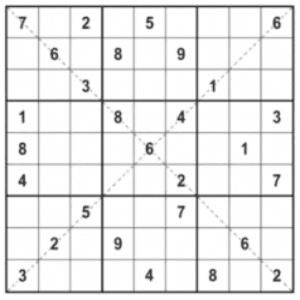
4. Diagonal Sudoku (X-Sudoku)
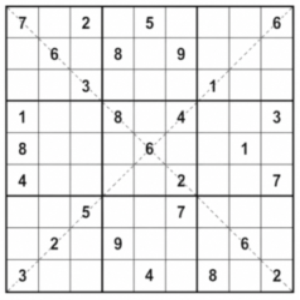
At first glance, Diagonal Sudoku looks almost identical to a regular Sudoku puzzle. Then you notice one extra rule.
Both main diagonals must also contain every number exactly once.
It sounds like a small change, but it dramatically reduces the number of possible placements and forces you to think about the puzzle in an entirely new direction. If you already enjoy classic Sudoku but want something slightly more challenging, Diagonal Sudoku is an excellent next step.
Why you'll enjoy it
- Simple additional rule.
- Familiar appearance.
- Encourages different deduction strategies.
Difficulty: Medium to Hard | Typical solving time: 20–40 minutes
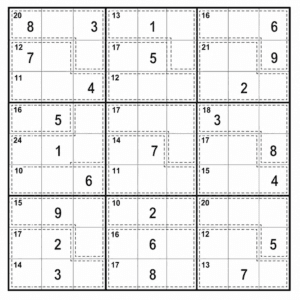
5. Killer Sudoku
Killer Sudoku combines Sudoku with arithmetic.
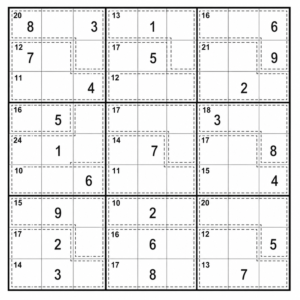
Instead of relying only on rows, columns, and boxes, the grid is divided into cages. Each cage contains a target sum. The numbers inside every cage must add up to that value, while still obeying the normal Sudoku rules.
Because many numbers are determined through arithmetic, Killer Sudoku feels like an entirely different puzzle even though the underlying Sudoku logic remains. It's a favourite among people who enjoy both mathematics and logical reasoning.
Why you'll enjoy it
- Combines two puzzle styles.
- Rich logical deduction.
- Highly rewarding.
Difficulty: Hard | Typical solving time: 25–50 minutes
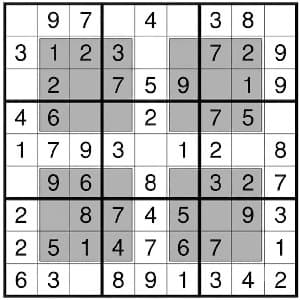
6. Windoku
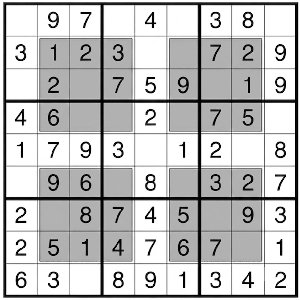
Windoku adds four additional highlighted regions to a normal Sudoku grid.
These extra regions must also contain every number exactly once. The result is a puzzle with more constraints and more opportunities for deduction.
Despite looking more complicated, many solvers find Windoku surprisingly intuitive after solving just a few puzzles. It's an excellent bridge between classic Sudoku and the more advanced variants.
Why you'll enjoy it
- Extra logical constraints.
- Familiar solving style.
- Excellent variety.
Difficulty: Medium | Typical solving time: 15–30 minutes
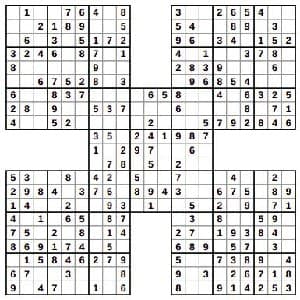
7. Samurai Sudoku
If you've ever wished one Sudoku puzzle lasted much longer, Samurai Sudoku is for you.
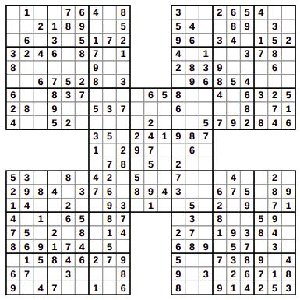
Instead of solving one grid, you'll solve five overlapping Sudoku puzzles that connect through shared regions. Progress in one puzzle often unlocks progress in another.
It's a wonderfully satisfying experience that rewards patience and long-term planning. Many experienced Sudoku enthusiasts consider Samurai Sudoku the ultimate pencil-and-paper challenge.
Why you'll enjoy it
- Five interconnected puzzles.
- Extremely satisfying.
- Ideal for dedicated puzzle lovers.
Difficulty: Very Hard | Typical solving time: 60–120+ minutes
Which Variant Should You Try First?
If you're completely new to Sudoku variants, start with Jigsaw Sudoku. It changes just enough to feel fresh while keeping the familiar Sudoku experience.
If you enjoy arithmetic alongside logic, Arrow Sudoku and Killer Sudoku are excellent choices.
If you're looking for a serious mental workout, 16×16 Sudoku and Samurai Sudoku will keep you occupied for hours.
The best approach is simple: Don't stick to just one variant. Rotate between them and you'll continually challenge different aspects of your logical thinking.
Where to Start
The easiest way to discover your favourite Sudoku variant is simply to try a few. Some people fall in love with irregular regions. Others enjoy arithmetic. Many eventually discover they enjoy giant 16×16 grids more than classic Sudoku.
The only way to know is to start solving.
Continue Your Sudoku Journey
If you enjoyed learning about these Sudoku variants, here are a few places to continue exploring:
Play Daily 9×9 Sudoku Browse All Books Explore Puzzle Downloads
Final Thoughts
Sudoku variants prove that a few small rule changes can create entirely new solving experiences.
Whether you're looking for a gentle change of pace with Jigsaw Sudoku, a mathematical challenge with Arrow or Killer Sudoku, or an epic puzzle session with 16×16 or Samurai Sudoku, there's a variant waiting to become your new favourite.
So grab a pencil, choose a variant that catches your attention, and discover just how much more there is to Sudoku beyond the classic 9×9 grid.
You might be surprised by which one keeps you coming back for more.